Water composes the guidelines for each hardscape. If you appreciate it, an interlocking driveway really feels strong, drains pipes cleanly, and stays attractive for several years. Neglect it, and also premium pavers can rattle, settle, or expand a fur layer of algae. I have actually reconstructed extra failed driveways because of water than for any type of various other single factor, and most of those failings were avoidable with a few early decisions.
Why drainage drives durability
Interlocking systems prosper because each component shares the lots with its next-door neighbors. That just works when the accumulation base stays steady and dry sufficient to maintain rubbing. When drainage focuses along a reduced spot or bedding sand becomes a channel for groundwater, the system loses bearing capacity. Frost finds its means into wet base and lifts it in winter season, after that drops it unevenly throughout thaw. Also in warm climates, saturated subgrade pumps great bits right into the base with every automobile pass, creating dips and ruts.
Good drain guards the subgrade from saturation, steers surface area water away prior to it can stick around, and offers trapped water a regulated course to exit. A durable Driveway Paving Installation is, at its core, a regulated hydrology task camouflaged as a handsome set of pavers.
Read the site initially, not the catalog
Before a shovel strikes the ground, hang around enjoying just how the site takes care of water. I like to check out after a rainfall or run a hose along high spots.
- Quick slope checkpoints Stand at the garage, look towards the street, and identify the natural loss. If you have to think about which means water would move, the slope is also flat. Note roof covering downspouts and sump discharge factors. If they pipeline onto the driveway, strategy to intercept or reroute. Look for discolored edges or moss bands. Those are historical puddles in disguise. Probe the dirt with a rod. Clay withstands and comes up glossy. Sandy loam falls apart and drains. Identify energies and tree roots. They can draw away subsurface water and complicate underdrains.
Most residential whole lots mix compacted fill near the house with indigenous soils farther out. Fill has a tendency to catch water, particularly along the garage apron where builders lawn sod Burlingame place dense backfill versus the foundation. You might see a different behavior at the road side where indigenous soils, frequently much better draining pipes, surface once more. Anticipate the base density and drain remedies to readjust across the length of the drive.
Get your numbers right on slope
The surface needs a constant pitch so water moves off without developing skid-prone steepness. For most interlocking driveway surface areas, a cross incline or longitudinal incline of 2 percent reads well and does reliably. That is a 2 centimeters decline per meter, or regarding a quarter inch per foot. I am comfortable throughout the 1.5 to 3 percent range depending on site restrictions. Listed below 1 percent, minor bulges catch water. Above 4 percent, parked cars can really feel odd and winter season traction worsens.
Where the driveway fulfills the garage, shield the threshold. A slight cross autumn or a trench drainpipe at the apron keeps stormwater from discovering its way right into the garage. If the site forces the driveway to pitch towards your home, do decline it and really hope. Mount a grated straight drainpipe along the apron and pipe to daytime or a basin.
For walkway changes, keep ADA-friendly slopes in mind if availability matters in your home. For a Pathway Paving Installation, go for mild cross slopes below 2 percent, and utilize very discreet surface area changes to avoid birdbaths where a walk satisfies a driveway.
Surface water versus subsurface water
They behave differently and need different controls.
Surface water is rain or meltwater rolling off pavers. We manage it with incline, collection factors like trench drains pipes or capture containers, and positive outlets. The guidelines are visible and intuitive.
Subsurface water is tricky. It gets here using high seasonal water level, perched water over clay seams, or focused flow along utility trenches. It saturates the subgrade and wicks up with the base. We counter it with well-graded, openly draining pipes base accumulation, geotextiles that divide penalties, and underdrains that alleviate pressure.
In frost areas, managing subsurface water is nonnegotiable. A completely dry base barely relocates under freeze-thaw. A wet base heaves substantially because water expands when it ices up. This is why 2 driveways on the very same road can age in a different way. The one with the completely dry base come through winter.
Permeable or conventional: select drainage by design, not trend
Interlocking pavers come in two broad flavors.
Traditional interlocking systems dropped water throughout the surface. Joints are tight, and bed linen sand sits on a compacted accumulation base that slopes toward a secure outfall. This is the workhorse for the majority of country Driveway Paving Installation jobs. It requires clear surface water drainage and, if soils are poor, subsurface alleviation using underdrain.
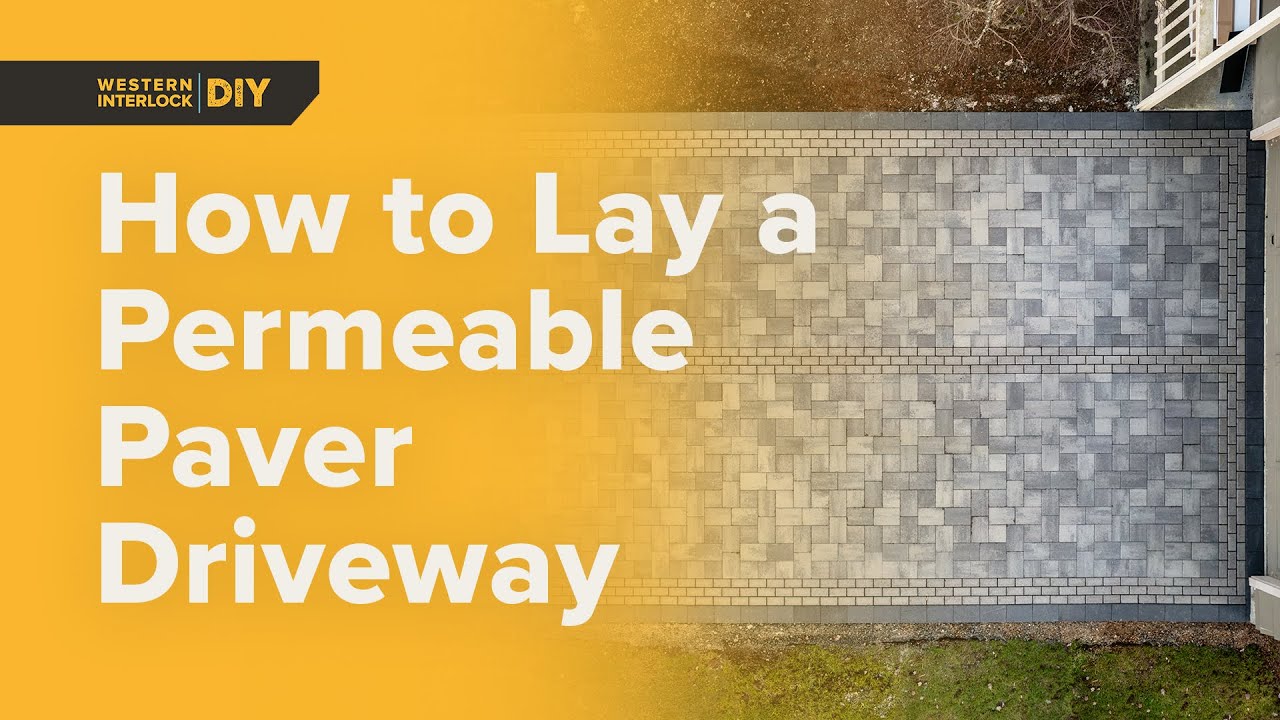
Permeable interlacing concrete pavers (PICP) welcome water into the system via larger, loaded joints and specialized layers of attire, open-graded rock. Instead of sending out water throughout the surface area, they keep it temporarily in the base and allow it penetrate or discharge with underdrains. On tight whole lots, near tree roots, or when local codes need stormwater reduction, PICP can solve problems that a conventional surface can not. They also reduce splash and sheet circulation ice. The tradeoff is tighter control of base rank, much more exact compaction, and a well-planned overflow path for big storms. Do not install permeable pavers over heavy clay without an overflow. The water will have no place to go.
I usually divided the distinction on mixed websites. Usage absorptive building and construction in the car park bay to catch roof covering water transmitted there, and typical in the apron where a cross slope to the street handles drainage easily. Edge details maintain both behaviors from hemorrhaging into each other.
Base products that appreciate water
The base is not simply a system. It is the heart of your water drainage plan.
For conventional interlocking driveways, a thick rated accumulation (DGA) base like 21A or 3/4 inch minus with fines compacts tight yet still permits lateral drainage when positioned over a steady, apart subgrade. Thickness depends on climate and soil. Over well-draining granular subgrade in a cozy environment, 6 to 8 inches can suffice under traveler automobiles. In frost zones or over clay, 10 to 14 inches is a safer variety. I enhance thickness an additional 2 inches along wheel courses due to the fact that duplicated loads emphasize those lanes greater than the center band.
For absorptive systems, utilize open-graded aggregates. Assume ASTM No. 2 or 3 at the bottom for storage space, No. 57 as a collar layer, and a bed linen layer of No. 8. These have little to no fines, creating voids for water to occupy temporarily. Compaction brings interlock amongst rocks, not fines movement. This base doubles as a detention container, so verify volume against your style tornado, typically the first 1 inch of rainfall or a neighborhood requirement. Consist of an underdrain if infiltration rates are inadequate or if groundwater rises seasonally.
Do not skip the geotextile conversation. On clay or silt subgrades, a nonwoven geotextile between subgrade and base quits fines from pumping up into your aggregate under automobile loads. Pick a textile with appropriate leak resistance and flow capability, and lap joints by 18 to 24 inches. On sandy soils, a woven separator can add stamina without restraining drainage. Stay clear of lining the entire base with nonporous membranes unless you are deliberately building a liner. Many driveway applications desire separation, not a bathtub.
Bedding and joint sands: little grains, big consequences
Bedding sand is not the area to save money or replacement coastline sand. Utilize a tidy, sharp, well-graded concrete sand. Screed to a regular 1 inch density. Thicker bed linens layers hold even more water and invite negotiation as sand moves right into bigger spaces below.
Polymeric joint sand resists washout and weeds, but it is not a water-proof cement. On a driveway, it reduces surface disintegration and keeps joints complete, which helps with lots circulation. When you portable, do so in several passes with a plate compactor fitted with a pad to safeguard the paver surface. Shake once over the bedding to seat pavers, move sand, compact again to clear up joints, move and compact a final time. With polymeric sands, follow the manufacturer's wetting pattern thoroughly. Over-watering washes binders into the surface area and develops a crust that catches wetness in joints.
Edge restriction and confinement
Good water drainage depends on pavers staying where they belong. If edges slip, reduced spots develop and accumulate water. Usage concrete visuals, concealed concrete toe, or robust plastic edge restraints rated for driveways, anchored into compressed base, not simply bedding sand. On permeable tasks, layout sides that do not obstruct side exfiltration unless you mean to capture and pipeline it.
At the street, match the roadway crown and guarantee the apron shifts without a lip that swimming pools water. At the garage, a tight, straight side lowers turbulence at a trench drain and boosts seal at the door threshold.
Where your water goes matters
It is one point to obtain water off a driveway, an additional to maintain it from becoming your neighbor's migraine. Many towns ban disposing driveway overflow right into drains without licenses or call for seepage on website. Strategy an outlet:
- A buried pipe to daylight on a downhill slope, protected with a riprap splash pad to prevent erosion. A shallow swale along a side backyard that blends into landscape contours. A dry well sized for neighborhood style storms if the soils accept infiltration. Connection to a storm container where codes permit, with a backflow preventer if the container additional charges in hefty rain. For permeable systems, an underdrain with an orifice plate to meter release.
Mind roofing water. A solitary downspout can release hundreds of gallons in a tornado. If it hits your driveway, your pavers should deal with it. I like to pipeline downspouts under the driveway base to a grass area or basin rather than discarding them on the surface.
Details that make or damage the garage threshold
Two persisting failure points show up at the house.
First, a flat apron that welcomes water towards the garage. Service: keep at least 1 percent fall away from the building throughout the initial 5 to 6 feet, and, when the website pitches the wrong way, use a linear trench drain in front of the apron. Choose a drain body ranked for lorry loads and maintain the grate flush with the paver surface.
Second, saturated backfill adjacent to the foundation. It suches as to clear up and to trap water. Prior to building the base below, small in slim lifts and, if required, build a short section of supported base making use of a cement-treated layer or a well-compacted open-graded base with an underdrain that connects into your tornado electrical outlet. This stiffens the apron and stops reflective settlement lines where cars cross the joint between old fill and indigenous ground.
Cold environments and frost heave
Frost deepness is not a tip. If you live where the ground freezes, style to maintain the water level and capillary increase listed below the base. Usage free-draining base accumulations and take into consideration upping density to place the base easily above frost-susceptible subgrade. Side restraints should resist lateral heave. If you see springtime sponginess in lawns near the drive, anticipate subsurface water to test your base. An underdrain along the high side of the driveway can intercept lateral groundwater and discharge it before it gets to the base.
I additionally avoid great bed linens sands in areas with hefty deicing salt usage. Salts draw dampness and can aggravate freeze-thaw biking in joints. Rinsing the surface area in very early spring expands life and maintains joint sands clean.
Construction series with drainage checkpoints
A clean series assists prevent dampness traps and covert weak spots.
- Excavate to make deepness plus 6 to 12 inches past final sides for functioning space. Shape the subgrade to match the desired incline so you are not compeling drainage solely at the surface. Proof roll and portable the subgrade. If pumping or rutting shows up, support with a geotextile and, in poor spots, a couple of inches of open-graded stone before thick base. Place base in 3 to 4 inch lifts, portable each lift to target thickness, and right inclines as you develop. Set up underdrain at the low side or along foundations, keeping be up to outlet. Screed bed linen layer, established pavers, small in stages, and fill joints, verifying that water runs off with a hose examination before locking every little thing in. Install edge restrictions, link water drainage elements to outlets, and secure soils around electrical outlets with rock to prevent erosion.
A fast pipe test is disclosing. I have actually seen installers avoid it, just to learn after the first storm that a shallow tummy in the center holds water. Fifteen minutes with a hose pipe conserves a revisit.
Tying in sidewalks and landscape
Driveways seldom exist alone. A Walkway Paving Installation that fulfills the driveway can either aid or harm water drainage. Aim to satisfy the driveway at a high point so both surfaces can drop away. If a stroll has to leave the house towards the drive, give it a minor cross fall away from the foundation and a thin crushed rock border versus planting beds to soak up splash and decrease debris on the pavers. Where a sidewalk meets a driveway at a lower altitude, consider a slim slot drain to throttle debris and water prior to it reaches the drive.
Planting options matter as well. Thick turf at the reduced edge of a driveway can reduce and spread out drainage. A crushed rock compost strip along a fence line can function as a shallow swale. Prevent elevated bordering that catches water on the hardscape unless you intentionally path it to a drain.
Maintenance that preserves drainage
Pavers are forgiving if you maintain paths open. Move sand right into joints annually where traffic or plowing thins them. Maintain trench drainpipe grates clear of fallen leaves. If you see joint lines going environment-friendly, you likely have shaded, damp areas. Enhance sunlight exposure ideally or tidy the surface area prior to algae holds. For permeable systems, vacuum cleaner sweeping each year or 2 maintains gaps open. A shop vac and patience can bring back a clogged joint section. Do not pressure clean with a tight nozzle close to joints unless you prepare to re-sand immediately.
Watch for very early negotiation at wheel courses in the first period. A slim anxiety telegrams that water is focusing below or that base compaction was light. Correcting it early, before freeze-thaw cycles magnify the dip, is simpler and less costly. Lift pavers in the influenced area, add and compact base or bed linen as needed, and reset.
Common mistakes I still see
Builders and house owners commonly trust the paver to address grading that the subgrade ought to take care of. Requiring a 2 percent surface slope over a dead-flat or backwards-pitched subgrade leaves a bedding layer that differs from a whisper to a cushion. The thick areas stay wet and resolve. Forming the subgrade first.
Another is missing the separator fabric on low soils. If your heel leaves a moist print on the subgrade, it desires separation. Otherwise penalties will certainly move into your base when a truck parks overnight, and wheel course dips will certainly appear within months.
I additionally see trench drains mounted without a favorable outlet. They look proper at the garage, however the body ends up dead-ending right into compacted soil. Water caught there softens the adjacent base. Always pipe drains pipes to air or a basin and offer cleanouts.
Finally, over-reliance on polymeric sand to heal much deeper drainage wrongs. It is a great item in its lane, but it can not stop water that needs to have been guided with incline or a drain.
Budget, permits, and truthful trade-offs
Not every site requires a full open-graded permeable area with underdrains. Numerous do well with a conventional base, clean slopes, and focus to weak dirts. That claimed, the dollars you take into drain details pay back. As a rule of thumb, on a mid-size residential driveway of 600 to 900 square feet, budgeting an added 5 to 15 percent for geotextile, an underdrain line, and a proper apron drainpipe is normal when soils are questionable or when slopes combat you. It is less than the cost of a tear-out in year three.
Check local codes. Some cities require on-site stormwater administration for brand-new or increased impervious areas over a threshold. Absorptive pavers may receive credits if built to spec with paperwork of base quantity and underdrain flow control. If you are including a trench drainpipe, you might require a license to connect to a local storm lateral. A quick phone call early in layout protects against red tags later.
Two quick site stories
A sloped coastal whole lot had a short driveway that pitched correctly to the road, yet every wintertime the apron rippled. The culprit was not surface water, it was side groundwater pinned against thick fill at the foundation. We reduced a narrow trench along the high side, set a perforated underdrain in No. 57 rock wrapped in nonwoven geotextile, and linked it to an aesthetic discharge. The next spring, the apron remained flat. The pavers had actually not been the issue. Trapped water had.
On one more project, a woody website with clay subgrade and a gentle driveway autumn towards your house left no room for surface area drainage. We set up a direct drainpipe at the garage, piped it around the house to daytime, and used permeable building and construction for the initial 15 feet to save roof downspout flows that hit the drive during storms. The remainder of the drive utilized a traditional base with a regular 2 percent cross fall toward a landscape swale. The mix appreciated each micro-condition. Five years on, the joints are tidy and there are no dips, despite having periodic shipment trucks.
Bringing it all together
Successful interlocking driveway paving does not hinge on an exotic paver or a secret additive. It depends on common, repeatable choices that recognize water. Forming the subgrade to relocate water where you require it to go. Choose base materials that match your soils and climate, and separate fines where they endanger to move. Give surface area water a dependable exit, and offer subsurface water an alleviation course. Mind the sides, the garage threshold, and the apron. When you tie in a Sidewalk Paving Installment, secure the foundation and prevent developing cross-flows that slow or trap water.
If you get to completion of building and can trace every raindrop's journey off and through the system in your mind, the rest of the driveway's life tends to go your means. That is drainage doing its quiet, vital work.